
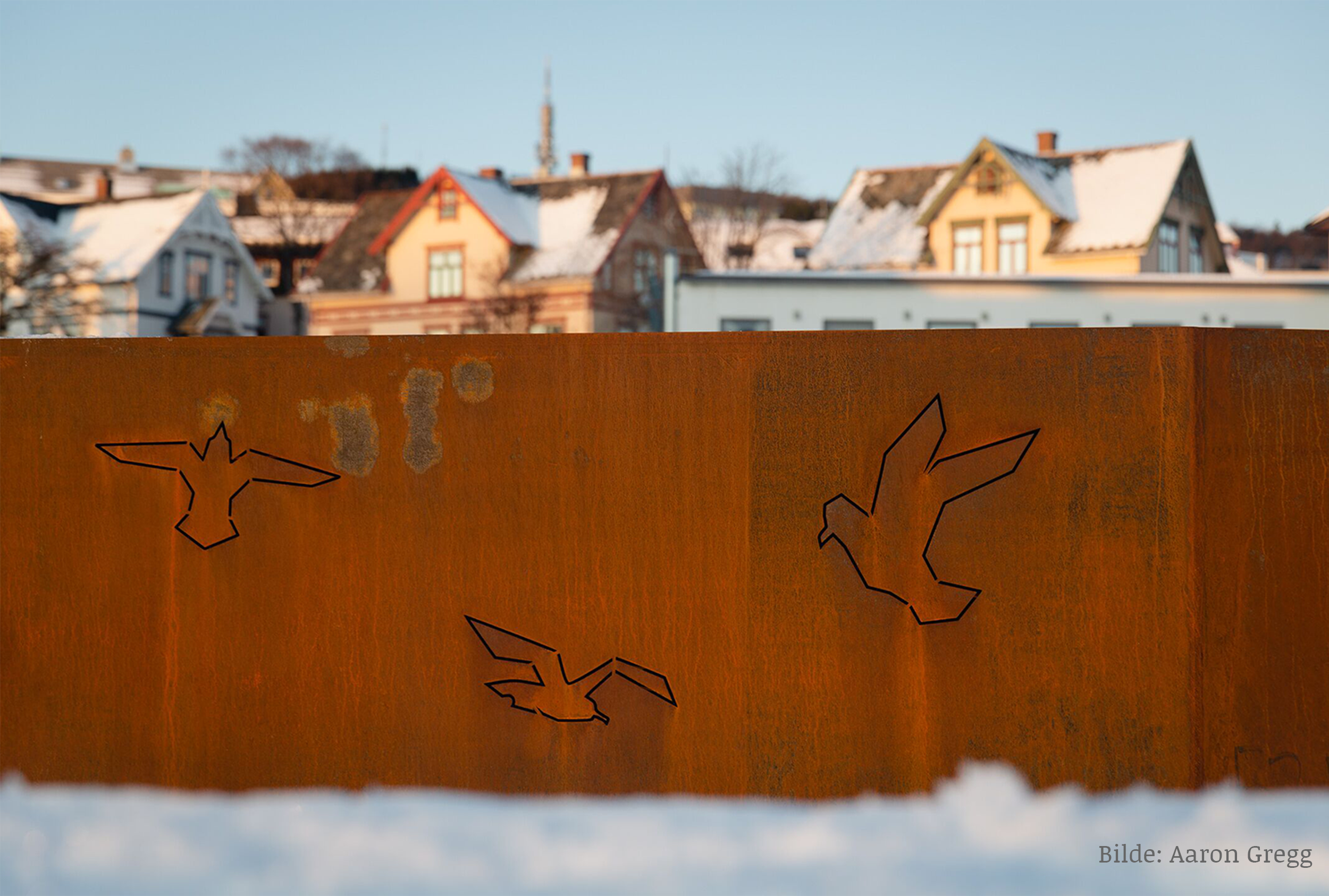
Seagulls on a wall
Seagulls on a wall
Background
The team behind the Kunstien Harstad (artpath) wanted something stylish to adorn the corten steel walls at the new Harstad promenade. Ideally, they wanted some stylized contour drawings of the seagull, that showed them in different dynamic poses.
As an apprentice at CHILI HARSTAD, I was tasked with creating this. The project was both rewarding and challenging. This is because I got to work both traditionally and digitally, but also needed to create a ready to use DWG file for production.
Project Objective
Create stylized seagulls shapes, and develop them into production ready DWG files for the metal cutter.
Roles & Tools
- Primary role: Illustrator & Profile Designer
- Digital tools: Photoshop, Illustrator
- Traditional tools: Inked pens
Project timeline
5+ weeks (due to inbetween iterations)
Sketching stage
Before stylizing something, it is important to study the object carefully, and ask yourself:
What characterizes them best?
How do you reflect this?
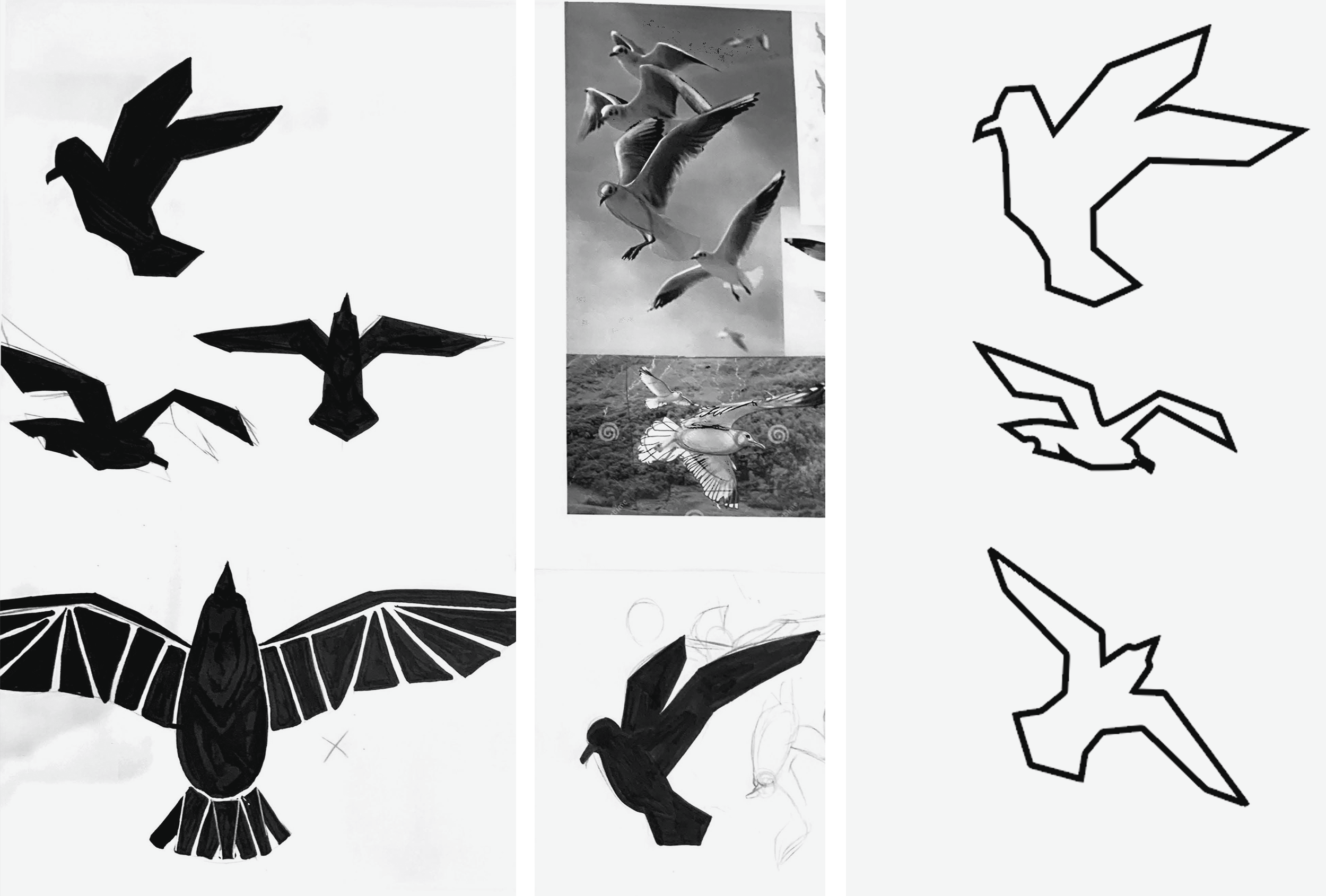
To figure this out, I studied and sketched over some printed images of the seagulls. This way, I was able to figure out the movement, shapes and general characteristic of the object.
After familiarizing myself with the organic aspect, I converted it into more geometric shapes. This was then scanned to continue digitally.
Ready for production
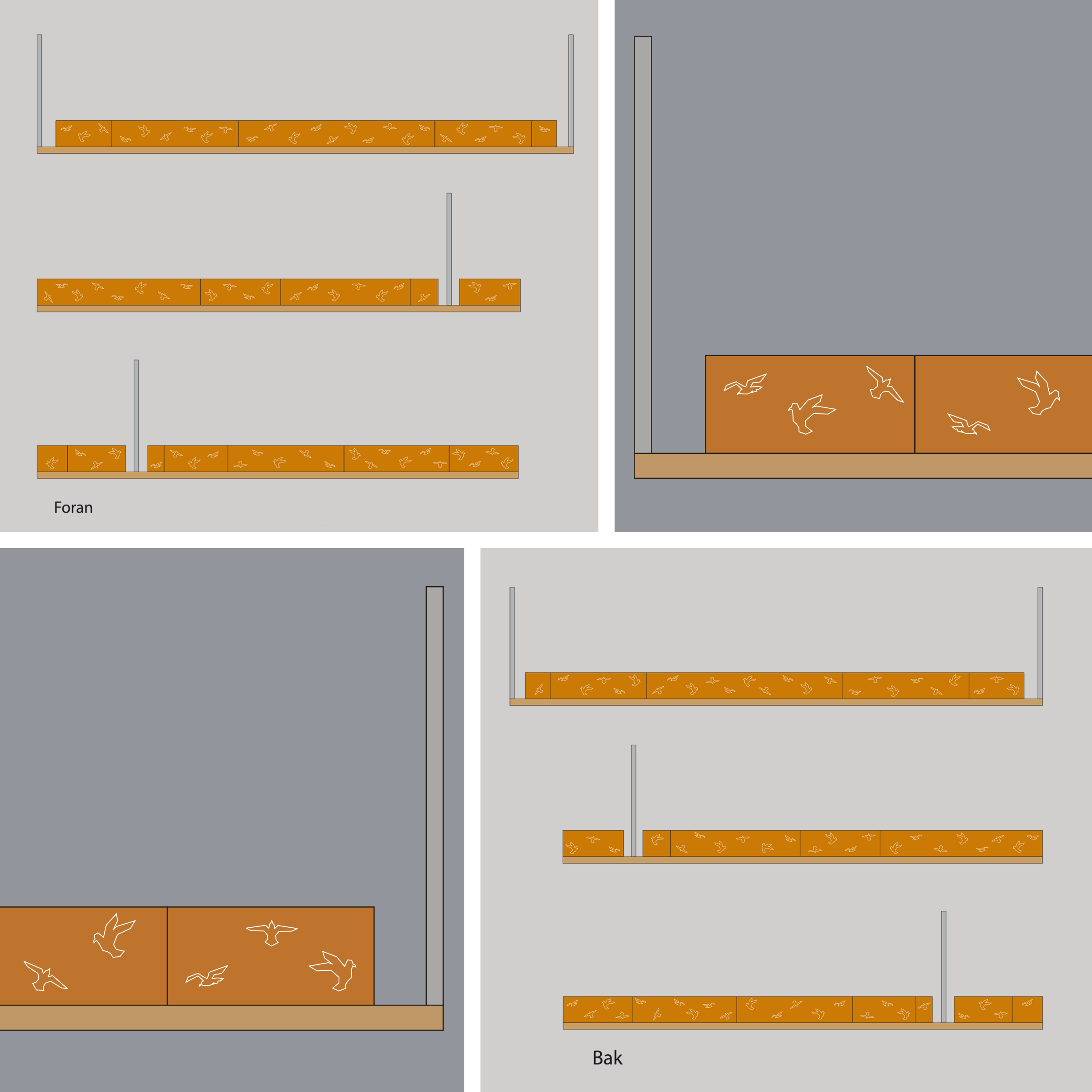
After drawing the seagulls cleanly in Adobe Illustrator, I set up a flat sketch. This should be more of a help to both me, the project manager and the customer. We had to be 100% sure everything looked right before sending it to production.
The layout on the floor plan was in 1:10. That way, we saw how it would look when finished. After the proofreading was approved, we sent off the DWG files for carving.
Final Thoughts
Most projects like this take time before they can be implemented. You need to keep in mind that what you create aligns with the customer’s needs and what would stylistically fit the most. Since most of the customer communication happened through the project leader, it meant that I could even make changes and iterations during customer meetings.
If there’s one thing I could have done better, it would’ve been exploring other stylistic options. I would also look into different ways to read a DWG file for production with Illustrator. The files would sometimes convert from millimeters to inches, which could have caused huge production costs. Thankfully, it was discovered before the cutting process.